The Year of Thawing

It was exactly a year ago in July 2023 that my therapist essentially told me that I had been doing therapy wrong. “We’ve been working together for 7 years now. Do you trust me enough now to let me dig a little?” Apparently, she had been biding her time to finally get to the real work. We had processed through the trauma of exiting Bali, deconstructing faith, and all sorts of challenges of the moment, but she had seen glimpses of pain that I wasn’t even aware I was feeling. I agreed, and she sent me off with a list of questions that I dutifully began pondering, adding a few of my own.

One of the questions on my list was “What was it in your life that made the first crack in your childhood ideology?”

It was not a difficult question. I knew the answer instantly. The answer was Marcus, my first boyfriend (and the only person I dated before I met and married Dan). He and I had had a love at first sight experience when my family was back in the USA on a home assignment during my sophomore year at high school. For 6 months, we tried to navigate my parents’ increasing hostility and absurdly controlling rules until a return to Honduras and its lack of phones/internet made us break up. I had been absolutely devasted and on some level still ached over it 25 years later –  though it took me a few more months to learn why.

Marcus had been a hinge point in my life because he gave me permission to think outside of the designated lines, and our relationship set a standard for how I wanted to be treated in relationships. He was the first person to ask me hard questions about the faith that I had been born to and to allow me to acknowledge the cognitive dissonance of so many of my own observations. He was the first feminist I had ever encountered, and the way he interacted with me empowered my agency and understanding of consent. He was gentle with me but also unafraid to point out that the way I was being treated in my family was not okay and that kindness was something that I should be able to expect rather than earn. Though our relationship ended when I moved away, his influence on my life was permanent.

I took these thoughts back to therapy and had to take a look at some pretty deep, unresolved grief about Marcus. I remembered crying every day for months after we returned to Honduras, but because my parents hated him so much, I didn’t talk about it. And they didn’t ask. In fact, I never even heard his name again or received any acknowledgment that I had slipped into my first experience of depression. Eventually, I learned that I had been dealing with something called “complicated grief” which is a chronic type of grieving that a small number of people experience, most often after the traumatic death of a loved one. It’s far more likely to suffer this type of grief when you have no real support through the loss. Much later, my therapist observed that Marcus had been the only safe attachment figure in my childhood, which explained the depth of my grief and also why even after he was out of my life, the memory of him was an anchor to sanity in what felt like an emotional hurricane for the rest of my adolescence. I am not sure I would have made it to adulthood without being completely broken had it not been for the love he showed me and the lessons he taught me.

Looking at the lack of support and parental care during what was easily the most painful thing I had gone through as a kid pushed me to start looking at other experiences. I dug out a box of old journals from the attic and spent a week reading through every single one of them. I wanted to know if my memories were accurate, and I wanted to know if there was more that I hadn’t remembered.

I found that my memories were accurate and that there was not a whole lot that I read that I had forgotten. That wasn’t the problem. The issue was that my understanding of the nature of those events was warped. As I began talking about my childhood and teenage experiences with Dan and a few close friends, they responded with shock and sympathy.

Even my therapist couldn’t hide her surprise. “In all this time you have never come close to telling me those things.”

“I didn’t realize they were a big deal. Everyone has crap, and mine doesn’t seem that bad comparatively.”

“They are a big deal. What you are describing is serious childhood abuse and emotional neglect.”

“Oh. Then why don’t I feel anything about it?”

“Maybe that’s exactly what we should be trying to figure it out.”


By early October, I had increased my therapy appointments to weekly, and we were reviewing all sorts of childhood memories. I hit a wall one day and cried for hours. Within a week I had dropped 10 pounds, hadn’t slept for more than two or three nightmare filled hours a night, and was unable to focus on anything. I took a leave of absence from work for two weeks, and fortunately my colleagues graciously made up for my slack while I tried to get back to some sort of functioning over the next several months.

My therapist asked me to start seeing a trauma therapist who specialized in EMDR to work through different memories. I was told I likely have C-PTSD, which I initially didn’t believe until I took a inventory on family toxicity and was startled by the word “severe” in the results page. I wasn’t very excited to accept the idea of having C-PTSD because I know that C-PTSD doesn’t go away. However, as much as my experiences explained C-PTSD, the symptoms of C-PTSD that I was experiencing and have experienced for as long as I can remember validated the depth of pain I had experienced as a kid.

It got worse before it got better, but I was surrounded by an incredible network of friends who held me when I was falling apart, answering SOS calls when I found myself crying on the bathroom floor, often unsure why. I felt all these things deeply, but they weren’t connected to a particular thought or memory. It was more like an avalanche of frozen tears had thawed and needed release.

Eventually, I put together some hard truths.

My parents had used extreme isolation as a punishment. I actually always preferred to get spanked (which I was multiple times a week with belts, flyswatters, and hands) because the alternative was being grounded. I’ve heard people talk about being grounded my whole life, and I always assumed that their experiences were like mine. Apparently not. In my case, I was put in my room sometimes for hours, but often for days, and a few times for weeks. Since I was homeschooled, it meant that I didn’t even have the break of going to school. I came out to eat, but otherwise was stuck in my room. If my parents were particularly mad, they would remove all my books as well, leaving me to literally stare at the ceiling. I developed a fantastic fantasy world, creating a library of stories in my head. I also developed an intense fear of boredom and of making people I love angry at me. I had an expectation of being emotionally abandoned so deep that in my early adulthood it took people about ten years of consistent friendship before I would truly open up to them.

I learned that I was over-functioning in relationships, not trusting anyone but myself to take care of my needs, but also believing that my value in relationships was meeting others’ needs. I still struggle to ask for anyone to do anything for me without a deep sense of shame and guilt for even having needs and desires. It wasn’t hard to figure out where the messaging behind this thought process came from.  As a small kid, I learned very early to be independent. I had 3 more siblings born before I was 11, and my mom homeschooled while my dad worked multiple jobs. If I wasn’t doing school work, doing a LOT of chores, or taking care of babies, I made myself scarce. Not needing anything was clearly the most helpful way to be, and requests for attention or needing comfort were often met with frustration at the inconvenience or worse, a re-write that made my parent’s feelings about my feelings the only important thing. I understood that I needed to take care of myself and was completely capable of doing so. I was the definition of a parentified child. My parents seemed content to let me manage myself, and when I was young, they seemed to enjoy that I was the feisty ring leader of my friends.

However, when I hit puberty I was suddenly told that I needed a chaperone. I learned that I wasn’t to be trusted alone and that I needed to be protected by a man. Stating my opinion was now labeled “disrespectful,” and though I had always been one to take charge, I  learned that my religion forbade women from leading. I could see that the only thing that had changed was my body, so I learned that being a woman meant lost autonomy and the rule of men, regardless of their abilities and my own. And somehow it was God’s way no matter how illogical.

The desire to be treated the way that I had been treated AS A SMALL KID was the basis for most of the fighting that happened between myself and my parents during high school. I hated the new restrictions that now infantilized me when I had once been allowed nearly complete autonomy. I had been taught to be independent and opinionated and confident, but now I was punished for being exactly those things. Sometimes violently.

For a couple of years around the time that I dated Marcus and for a while afterwards, I fought to have my own voice and my own thoughts. I wanted to be respected, even if what I believed was not in line with my parents’ ideas. I stood up for myself, but usually it resulted in some sort of punishment. That ended abruptly in a night of extreme violence when I realized that standing up for myself was unsafe and there was literally nowhere to go and no one to help me since I was overseas. I knew how I deserved to be treated, and I also knew that in a different situation I would have left home permanently, but neither of those things were possible. So I got quiet. I knew that the only way out was pretending that I was “trustworthy,” a code for “a good Christian woman.” It was the only way to stay safe. I stuffed down all of the cognitive dissonance that I felt and pretended that it all made sense and that I was finally maturing away from my sassy teenage self that constantly butted heads with my parents. Eventually, I forgot that I was pretending.

In some ways, it has felt like I have had to mentally go back to that night of violence when everything in me shut down and take up residence there. Oddly, I still feel very few emotions about that night. It happened, but it still doesn’t feel like I was there, even though I have pages of the experience and the immediately following feelings about it written down. I guess at some point my brain simply decided that those emotions weren’t going to help me survive, so they were broken off and tucked somewhere that I still haven’t found. This type of dissociation became my body’s go-to method of dealing with anything difficult. For my whole adult life, I’ve been regularly affirmed in my productivity and my capability to work robotically. It is something that certainly has helped me in my career and helped me survive many difficult situations, so I saw it as an asset until I realized that it was something I was doing automatically to avoid dangerous feelings like fear, grief, and even tenderness.

These days, I am still unpacking memories, but I’ve realized that it’s entirely possible that I will never find the feelings that are supposed to go with the abusive moments of childhood and the many ways in which I was abandoned to care for myself emotionally and psychologically. Instead of trying to find these lost emotions, I am working on understanding the impact of them in my life today. I am learning to recognize when I have a need and ask the people that I trust to help me with those needs, even trying to believe that they actually want to know and help. It’s still a terrifying thing to do. I am learning to be a human rather than a robot and allow myself to rest regularly. I am pursuing personal pleasure and joy rather than believing that I have to prove my worth by the value and utility I bring to others. I am allowing myself to walk away from relationships that aren’t serving me and to lean into brand new relationships with tentative vulnerability.  At the very least, I am learning to recognize what I feel.

One of the most difficult things for me is the fact that those with C-PTSD have no “before” to compare themselves to. Because it’s a disorder caused by chronic trauma in childhood rather than a single event like PTSD, we don’t really know who we would have become without our trauma. It’s even more tricky for those, like myself, who have a history largely defined by emotional neglect because it’s incredibly hard to recognize the impact of what didn’t happen. I don’t know what parts of my personality are ME and what are parts that developed to keep me safe. The only thing that I know to do is to allow for the possibility that some of the things that have felt at core of who I am are actually just habitual coping mechanisms, and then allow them to morph or to go away completely. It’s been odd to realize that I am far softer, far less confident, far more tender and emotional than I knew. I’m getting to know myself again, but it feels more like meeting myself for the first time.

It’s been a year of intense inner work, and it has not been particularly fun. I know there is more to do. (Recently, my therapist prescribed me a book on self-compassion that I know is going to sting a little.) But I can’t imagine still being frozen where I was emotionally for so long, and I can’t imagine settling for shallow relationships that have dominated my life because I have always been too scared to believe that anything else was safe or possible. Speaking of safe relationships… Marcus is back in my life again. With Dan’s encouragement, I looked him up last fall. He is exactly who I expected him to be 25 years later, and having his friendship again has been healing and joyful. In fact, as my only “witness” to some things, he lifted a few boxes down for me to sort out that I know I would have never been able to get to otherwise. My childhood was lonely and fearful, and my young adulthood was marked by isolation and numbness. But on the other side of the last year, I feel well loved by a lot of wonderful people, and I am experiencing a bigger and bigger range of emotions. It’s been quite a year.

After 19 Years of Marriage, I Think Divorce is WONDERFUL!

My husband and I just passed our 19th anniversary. And since we started dating right after we turned 18 (married at barely 20), it means we’ve been together for well over half our lives. As we hit this milestone, I found myself reflecting on how much I have grown fond of divorce.

Before anyone close to us freaks out, don’t worry. This isn’t an announcement nor are either of us ready to jump ship. That’s just the thing… I am only here because I don’t want to leave. This was not always the case.

Like everyone else who grew up in conservative evangelicalism, I was raised knowing how BAD divorce is. God hates divorce. Marriage is a covenant between a man and a woman, and it lasts forever. Divorce is a sin, and while God can forgive it, the decision will follow you to your shame for the rest of your life. The permanency of marriage was told and shown to me in a million ways.

In fact, one core memory I have from when I was about eleven was listening to a particularly horrible, screaming fight between my parents. I escaped to the backyard until eventually my mom found me and simply said, “Marriage is forever. Sometimes you fall in love and sometimes you fall out. But if you fall out, you stick around until you fall back in.” I remember thinking how much I never wanted to be stuck with someone just waiting until I liked them again.

As I got older, I was told that the permanency of marriage was a comfort that non-Christian, divorce-happy couples didn’t have. It was a guarantee of sticking together through life’s ups and downs, and it promised security for those who took the covenant seriously. (Nevermind that Christian marriages have roughly the same divorce rates as anyone else.) I was told that those couples for whom divorce was an option lived in fear that the other would get bored or things would get hard and their spouse would leave them. Not having an exit door was not only righteous, it meant you were safe from abandonment.

I brought this belief into my own marriage. Despite my misgivings about relationships and the fear of being subservient and controlled by a husband, I married young. Dan was far more egalitarian than any Christian guy I had met before then. I had known him for several years as a friend before we dated so I thought I would be safe from my biggest worries of being consumed by my husband’s needs and dreams. We married, and for the first 15 years, we too believed in sticking-it-out-no-matter-what. Ironically, we came close to separating at one point, and some very good (and very expensive) non-Christian marriage counseling helped us through the enormous wall we had been banging up against for years: I wanted to be able to think my own thoughts and believe my own beliefs; he felt responsible for my soul, and my thoughts and beliefs were counter to what he thought was God’s way.

As he let go of the belief that he was spiritually responsible for me and I learned how to be more gentle with his fears, our relationship began to heal. Good thing too because right around the corner was a whopping case of spiritual abuse and trauma from our missions agency. That experience brought us closer together, but the combination of having broken away from some fundamentalist beliefs, being abused in our religion, and watching American evangelicals lose their damn minds over Donald Trump sent us both into a tailspin of faith deconstruction.

Nothing was left unexamined, including our marriage (again) and the institution of it in general. I came to the same conclusion that divorce is… wonderful. I don’t mean it isn’t sad or hard or even tragic when it happens. But it is WONDERFUL that we have a choice. That we aren’t stuck. That we can unmake a decision, walk away, start over, or simply realize that who we are now is no longer suited to partner with the person that made sense once upon a time.

Now that I am pushing 40, I’ve watched a whole lot of people, including people I am very close to, walk through divorce. Not a one of them has made that decision quickly or easily, and I have only been able to feel grateful that they have that choice at all. Because so. many. people. trapped in religious fundamentalism really don’t feel that they have a choice. They are literally wasting precious years of their lives in misery, years that they will never get back spent in daily suffering that is completely unnecessary.

I was told that not having the word “divorce” in our couples vocabulary would be comforting and bring a sense of peace and security. In reality, all it brought was fear and a feeling of being completely stuck unless we were willing to risk our souls by disobeying God’s rules. I was never sure if Dan stayed in our marriage because he wanted to. I didn’t know if he loved me or he just loved God enough to put up with me. Honestly, I didn’t know if I was still married because I loved Dan or because I was a good Christian woman.

Now, I know. I know that everyday we stay together it is because both of us want to be here. He is free to go, and so am I, with no shame and no guilt. It doesn’t mean that our marriage is easy. It means that our marriage is built on love and on choosing each other freely every single day. The idea that “not having divorce as an option brings peace” is just another lie of Christian fundamentalism. The truth is that any time we have agency and choice, we live with more peace and joy.

Religious Trauma is a Real Thing (Podcast interview)

A few months ago, an old college friend asked me if I would be interested in being a guest on a new podcast that a colleague of hers was starting on Religious Trauma. I agreed, and sat down to a chat with Anna (a therapist) about what it’s like to go through religious trauma/spiritual abuse as a missionary. Being a victim of RT/SA is awful for everyone, but going through it as a missionary is particularly isolating and scary because our choices are to 1) submit to the abuse and stay quiet or 2) to lose our homes, our jobs, our livelihood, our friends, our faith community… everything.

What struck me in particular as I reflected on my story (you can see the full thing in print here) and the 4 years it’s been since we left our abusive missions agency is that we really can and do recover AND it takes a lot of mental and emotional energy to do so. It isn’t free.

At any rate, please give the podcast a listen, and if you are into the topic, go back and listen to the earlier episodes as well. The Spotify link is here, but you can find it on apple podcasts as well.

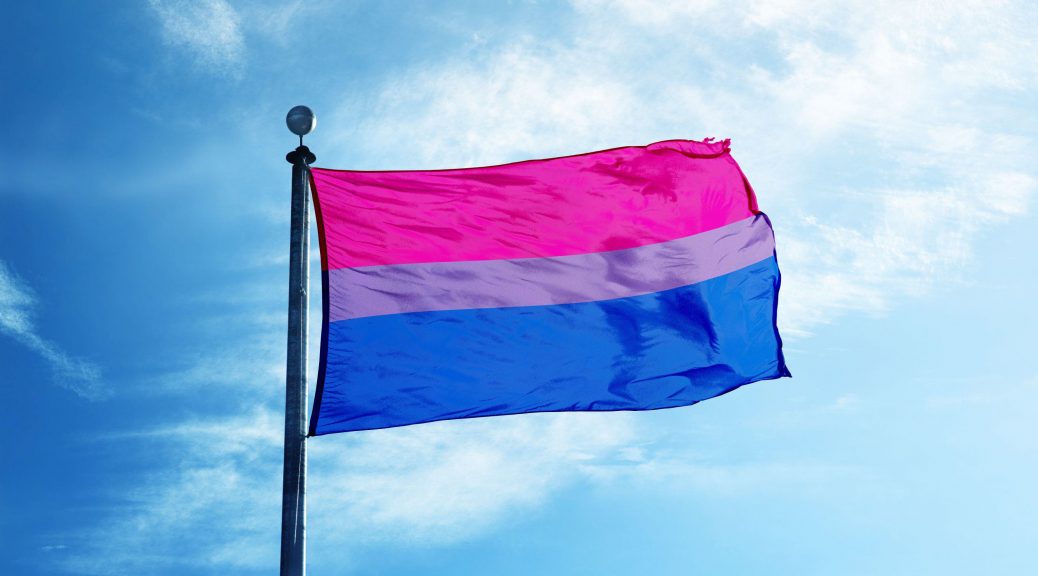
I am Bisexual

I’m bisexual.

It probably comes as a surprise to most people because I’ve been able to hide safely inside of a (mostly) happy, heterosexual marriage for the past 18 years. That’s the beauty and the frustration of being bisexual: you have the option to ignore the reality of your sexuality but you can also feel invisible – as if no one can know your fullness without intentional effort on your part. And the truth is that I didn’t always know either. I suspect it was in large part due to religious trauma that I dissociated from this part of myself for a long time and stuffed it into a tiny box hidden away. But now I’m weary of feeling invisible. I am tired of pretending to be an ally when really I am fighting for my own humanity.

……

In 2018, as a part of my work, I arranged for a therapist who specialized in the trauma therapy called Lifespan Integration Therapy to travel to Indonesia and train a group of counselors who work with survivors of trafficking. Part of the training was for the counselors to be clients for a session of the therapy, and though I am not a counselor myself, the training therapist offered to do a session with me as well. In this type of therapy, memory is used as a time marker to help people who have experienced trauma access memories and put them in their proper timeline (thus resolving trauma which is stuck in the present in our brains).

It turns out that my earliest memory (age 5 or 6) was seeing our pastor’s college aged son excommunicated because he was gay. It was the first time I heard the word, and the disgust with which it was said was so impactful that it became embedded far back in my mind. While the memory is still patchy, I remember words about how his father was unfit to be a pastor because he couldn’t “manage his own household,” a terror that became a part of me as a pastor and later missionary’s kid. Maybe that’s why when I saw attractive females, I never labeled it as “attraction.” I just called it “objective truth.” I wasn’t interested in them; I just recognized that they were physically attractive. I thought it was that simple.

As life would have it, I met my husband at age 15, started dating him at 18, having only ever had 1 other boyfriend and a couple of random dates with other guys in college. We married 20 days after my 20th birthday, and for the next 14 years, we existed in the bubble of the same conservative evangelical culture that I was raised in where being gay was a sinful choice like drinking too much or gambling. It was theology that never settled well with me, and as scientific articles began coming out concluding that sexuality is part of our biology rather than a choice, I became politically affirming. However, I believed that gay Christians were called to a “higher standard” of celibacy.

I had been in vocational ministry as a missionary for my entire adult life, and the political affirmation of gay rights was already a divisive issue for many people. I had to be careful because if my support for gay rights became known to donors, they would pull their funding for our ministry and we would lose our jobs. Fortunately, being overseas made it easy to hide. But the reinforcement that supporting the LGBT community would cost me and my family our life and livelihood was real. In 2018, we left vocational ministry, and there was finally space to ask the deeper questions that I knew very well could lead me to conclusions that would have gotten me in trouble in our previous life overseas. I started reading affirming theological positions and listening to stories from gay and lesbian Christians themselves.

In 2019, I listened to a podcast called Blue Babies Pink which was written by the gay son of a Baptist pastor who had been celibate until, over a long period of time, he became fully affirming. He spoke about families and how within Scripture, family and the creation of a family is seen from cover to cover and is posited as one of God’s greatest gifts. The church tells gay Christians that the church is their family, but as a mother and wife, I knew that was a ridiculous comparison. You can have deep roots in a church community, but they are not people that you hold hands with in the dark, give your power of attorney, or pass your name on to. In conservative theologies, gay people are the only group of humans who aren’t allowed to create a family. But if sexuality was how God made us, and God’s best gift is to be in a family, it made no sense to me that God would withhold that gift to a group of people he made exactly as they are. I became affirming.

Even still, I did not realize that this shift was another crack in the box I had been stuffed in. Looking back, I can see that being “right with God” was so important to me that until I could understand and believe an affirming theology, I would never have been able to see that it applied to me too.

As I landed on an affirming theology, I started to pull apart the religion I was raised with in general. I looked very hard at the purity culture that puts the responsibility for sexual sin squarely on my shoulders as a woman. To even look at a man not my husband was lust and just as evil as an illicit affair. I was told that to have emotional intimacy with any aside from my husband was a betrayal. If you know me, you know that I am very, very good at self-control and achieving my goals. My goal was to be good, honorable, and virtuous. I was so good, honorable, and virtuous that I turned off my own ability to experience normal feelings of attraction at all outside of my marriage, and even those sexual feelings I had to fight for. I don’t think it’s possible to repress your normal sexual feelings and reactions in every relationship but one. It’s an all-or-nothing repression. So I struggled to connect my brain and body even in my relationship with my husband. “Attraction” was something I was so conditioned to shut down that I would find myself doing the same even with Dan. It was like my body would respond and my brain would dump a bucket of cold water on it. I’d go hot and then immediately cold for no reason that I could figure out. I just thought I was broken, and I guess I kind of was.

While I did and still do love Jesus and follow his teachings, I left the church and began recovering from religious and spiritual abuse. Within therapy and some close, supportive relationships, I got honest about my own feelings and experiences. There was a lot of rage and a lot of grief, but as I learned to be honest about my feelings and beliefs, I was able to experience them too. The bucket-of-cold-water experience became more rare in my marriage, and at times my body reacted to other people with normal sexual feelings that I had essentially disassociated from for most of my life. And then it happened with women too.

It feels anti-climatic to leave it there, but that’s honestly the whole of the story. Dan was a part of this journey for the whole way, and I give him major credit for not being threatened much at all at the idea that I could be attracted to women as well. Our relationship has deepened and our intimate life got a whole lot more fun when I was honest with him, honest with myself, and was no longer scared I was angering God by being who I am.

It’s been three years now, and I’ve only told my closest friends and sisters and a handful of (mostly LGBT+) friends that I know are safe. Partly because I don’t think the truth of it radically changes anything in my life, other than that I am pretty sure if Dan dies first, I’d be dating a woman next. So why “come out” now?

Since returning to the USA, I have been more and more involved in supporting the LGBT+ community. After moving to Florida last summer, it’s become personal beyond my own experience. We put a pride flag outside of our home in large part to signal to our kids’ friends that we are a safe place for them to be who they are if they identify as LGBT+. And apparently it worked. I joke that we have every gay and transgender kid in the district hangs out at our house. There are kids who are out to Dan and me, but not their own parents because they fear for their safety. We’ve been asked by high schoolers if they can live with us if they come out when they turn 18 and get thrown out of their homes. I show up to protests in my “Free Mom Hugs” pride shirt, and I am loud about my protest of the draconian anti-LGBT+ legislation coming through our state government because I love these kids and I don’t want them to hide like I have.

But it feels less and less authentic to present myself as an ally rather than as a member of the LGBT+ community who has been directly impacted by anti-affirming theology, social exclusion, and laws that force us into hiding.

I tell people all the time that kids WANT to tell their parents when they are queer. They want to be loved and affirmed for who they are. They want to be celebrated and adored exactly as they are without any caveats. The same is true for me.

I do fear judgement, disappointment, and unwarranted fear for my soul. I fear losing credibility and my voice. I fear getting slammed with “love the sinner and hate the sin,” and being told that the only reason that I am still okay is because I am in a monogamous, heterosexual marriage. The truth is that people who have a problem with the hypothetical idea of me being in a relationship with a woman have a problem with who I am because it could have gone the other way with a few simple different circumstances. I’ve had the capacity to romantically love a woman since I had the capacity to romantically love. My brain just knew how dangerous that part of me would be to my wellbeing and tucked it away to keep me safe. I could easily hide it if I chose to just like so many bisexual people in heterosexual relationships (we are many!). But I don’t want to anymore.

I’m bisexual. And because I’ve healed so much, I finally know it and love that it’s a part of who I am. I hope others love that it’s a part of me too, but I don’t need them to. I’m whole inside of myself. Finally.